
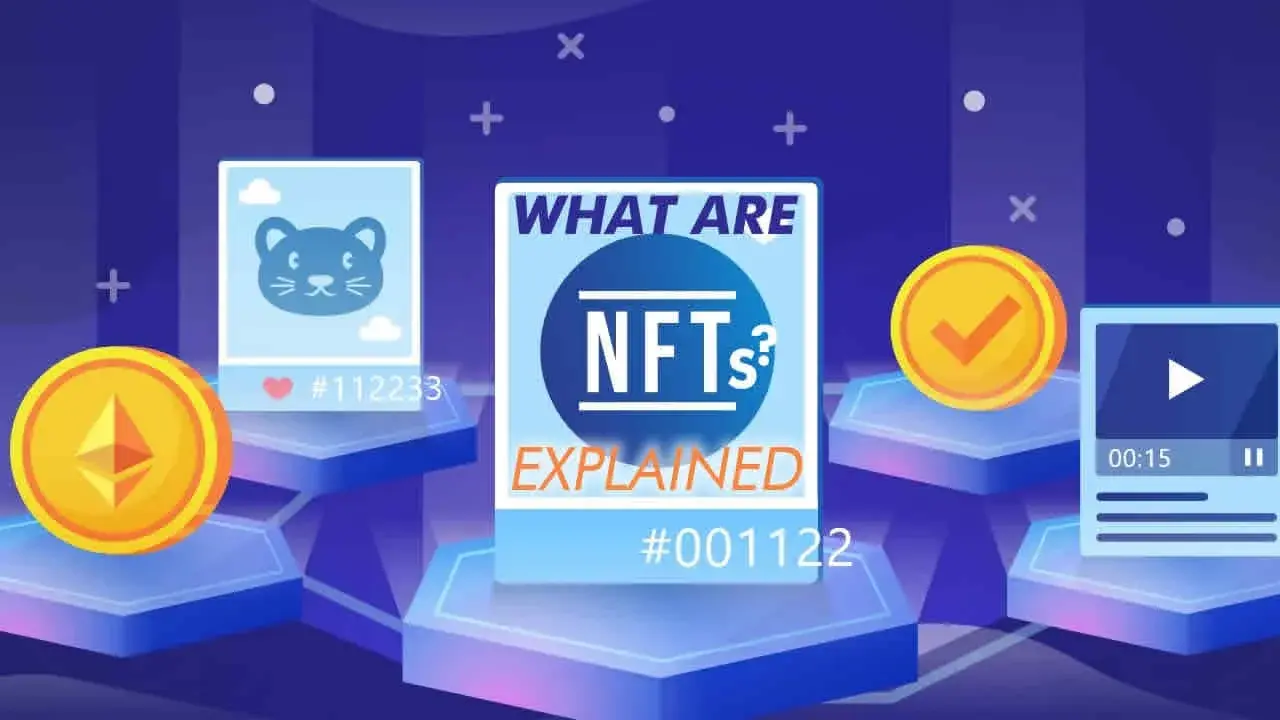
An NFT is a blockchain token with an individually identifiable token ID or asset class. It can record which wallet controls the token and point to metadata describing art, a game item, a ticket or another subject. It does not make the underlying media impossible to copy, guarantee authenticity, or automatically transfer copyright.
What an NFT buyer actually owns
Ownership on-chain normally means that a smart contract records a wallet as the holder of a particular token. The rights attached to the associated work depend on the issuer’s terms and applicable law. A 2024 joint U.S. Copyright Office and USPTO report emphasized that transferring an NFT does not necessarily transfer the associated asset or copyright; a separate agreement is ordinarily needed for copyright rights.
| Component | What to check |
|---|---|
| Token | Blockchain, contract address, token ID and token standard |
| Issuer | Whether the contract and collection are genuinely connected to the claimed creator |
| Metadata | Whether the URI and attributes are immutable or can be changed |
| Media | Fully on-chain, content-addressed storage such as IPFS, or a conventional server |
| License | Personal, commercial or other rights expressly granted to the holder |
| Controls | Admin keys, upgradeability, freezing, minting and marketplace approvals |
ERC-721 is the common standard for individually identified NFTs. ERC-1155 can manage multiple fungible or non-fungible token IDs in one contract and supports batch operations. Neither standard certifies the creator’s identity or the legality and value of the linked asset.
Metadata, royalties and security
Many NFTs store only a URI on-chain, while the image or other media lives elsewhere. An IPFS content identifier can reveal if content changes, but availability still depends on the content being retained and reachable. A normal HTTPS URL can break or be changed by its operator. “On-chain” should be verified at contract level rather than inferred from marketing.
Creator royalties are not guaranteed by NFT ownership. ERC-2981 standardizes how a contract reports royalty payment information, but its specification makes payment voluntary. Marketplace policy, transfer restrictions and the collection’s terms determine practical enforcement.
Common risks include fake collections, malicious mint sites, signature phishing, broad token approvals, compromised marketplaces, mutable metadata and illiquid pricing. Check the exact contract through an official source, inspect the transaction or signature request, use a separate wallet for higher-risk mints and never share a seed phrase.
Ethereum’s environmental profile also changed after this article was written. The network moved from proof of work to proof of stake in September 2022, reducing estimated energy consumption by about 99.95%. NFT impact still depends on the chain, storage and surrounding infrastructure, so one claim should not be generalized to every NFT.
Original November 2021 NFT explainer (historical archive)
The original author-written sections below are preserved substantially intact. Its marketplace rankings, sale prices, game-economy claims and proof-of-work environmental discussion reflect the 2021 market. The current sections above supersede statements implying that an NFT prevents copying, automatically transfers rights or guarantees royalties.
Non-fungible tokens (NFTs) are taking the art and gaming worlds by storm. Digital artists and gamers are seeing their lives change thanks to new communities and methods of earning and selling. Celebrities are joining in as well as they recognize a new opportunity to connect with fans.
From fine art and music to cats and rocks, these digital assets have exploded within blockchain news, some selling for millions of dollars. Some experts claim that NFTs are changing the landscape of investing forever, while others are convinced they’re a bubble poised to pop any day now.
NFTs have certainly been causing a splash and controversial debates – but what are they exactly?
What is a Non-Fungible Token (NFT)?
NFTs are tokens that we can use to represent ownership of unique items. They let us tokenize things like art, collectibles, even real estate.
In economics, a fungible asset is something that can be readily interchanged – like money. They can be exchanged because their value defines them rather than their unique properties. For example, you can swap a $100 note for five $20 notes and it will have the same value.
If something is non-fungible, it means it has unique properties so it can’t be interchanged with something else or divided into smaller units. It could be a house, or a painting such as the Mona Lisa, which is one of a kind. You can take a photo of the painting or buy a print, but there will only ever be one original painting.
In the same way, NFTs are scarce digital assets with distinctive characteristics, making them difficult to swap for another similar asset because it will likely not have the same value. Therefore, digital tokens can be thought of as certificates of ownership for virtual or physical assets.
How do NFTs Work?
NFTs exist on a blockchain, which is a distributed public ledger that records transactions and is maintained by thousands of interconnected computers around the world. The blockchain’s advanced encryption and peer-to-peer network secures the proof of ownership of NFTs, ensuring that no one can modify the record of ownership or copy and paste a new NFT into existence.
To create an NFT, it has to be “minted” from digital objects that can represent both tangible and intangible items, including:
- Art
- GIFs
- Videos
- Collectibles
- Music
- Virtual avatars and video game skins
- Designer sneakers
- Tickets to a real world event
- Deeds to a car
- Legal documents
Even tweets can be an NFT. Twitter co-founder Jack Dorsey sold his first ever tweet as an NFT for more than $2.9 million.
Ownership is managed through the uniqueID and metadata that no other token can replicate. NFTs are minted through smart contracts that assign ownership and manage the transferability of the NFTs. When someone creates or mints an NFT, they execute code stored in smart contracts that conform to different standards from regular tokens.
The owner or creator can also store specific information inside them. For instance, artists can sign their artwork by including their signature in an NFT’s metadata. NFTs can also contain smart contracts that may give the artist, for example, a cut of any future sale of the token.
Examples of NFTs
The NFT world is relatively new. In theory, the scope for NFTs could be anything that is unique or requires proof of ownership. Here are some examples of NFTs that exist today:
- Unique digital artwork
- Limited edition sneaker
- In-game items
- An essay
- Digital collectibles
- Domain names
- Event tickets
How and Where to Buy NFTs?
If you are keen to start your own NFT collection, you will need to acquire some key items. First, you will need to get a digital wallet that allows you to store NFTs and cryptocurrencies.
You will likely need to purchase some cryptocurrency such as Bitcoin (BTC), Ethereum (ETH), or Binance Coin (BNB), depending on what currencies your NFT provider accepts. You can buy crypto using exchange platforms and then you will be able to move the funds to your wallet of choice.
You will want to keep fees in mind as you research options. Most exchanges charge at least a percentage of your transaction when you buy crypto. Different NFT providers also have different gas fees which are fees you need to pay when you make an NFT purchase.
Once you’ve got your wallet set up and funded, there’s no shortage of NFT sites to shop. Currently, the largest NFT marketplaces are:
- OpenSea – the original peer-to-peer NFT marketplace, and the largest. Offers NFTs of everything from in-game items and collectibles, to artwork, music, GIFs, and more. To get started, all you need to do is create an account to browse NFT collections. You can also sort pieces by sales volume to discover new artists.
- Rarible – one of the leading NFT marketplaces on Ethereum, Rarible is a community-owned platform that showcases a wide range of digital art and collectibles. Similar to OpenSea, you can buy and sell all sorts of media. Sellers also have the option to create more than one NFT for a single image, selling it more than once.
- Axie Marketplace – NFT-powered video game Axie Infinity plays host to the second-largest NFT marketplace. It trades exclusively in Axies, which are cute, Pokémon-like digital pets which players can buy and trade on the Axie Marketplace. Unlike art NFTs, which are collected for collecting’s sake, Axie Infinity’s NFTs have a purpose: you can use them in-game to battle against monsters and other players, earning tokens that can be put towards breeding new creatures.
- CryptoPunks/Larva Labs – One of the most popular NFT collectibles on the Ethereum network, CryptoPunks is a series of 10,000 randomly generated characters with a pixel art aesthetic and unique attributes. CryptoPunks can be purchased at creator Larva Labs’ marketplace, where the majority of sales take place.
- BakerySwap – BakerySwap is one of the first to be launched on Binance Smart Chain (BSC). The NFT marketplace makes up one section of the platform, which also allows users to trade and swap liquidity assets directly with each other.
- Enjin Marketplace is the ideal choice for Enjin-based NFTs. The Enjin Wallet can help in listing and purchasing gaming collectibles and items easily. The marketplace offers game item collections, community-backed collectibles, and gamified reward programs.
- Foundation – Foundation bills itself as a “creative playground” for artists. It’s played host to a number of notable sales, including the NFT of iconic Internet meme Nyan Cat, Edward Snowden’s first NFT and an audiovisual digital collectible created by producer Richard D. James, better known as Aphex Twin. Foundation’s marketplace is simple to operate, letting you place bids on timed auctions just like you would with a regular auction site.
- KnownOrigin – KnownOrigin has a much smaller all-time trading volume because it aims to provide a more curated, gallery-like experience for the discerning NFT connoisseur. All of its artwork files are held on IPFS, which provides a measure of protection for the underlying assets. With a strong focus on digital art, this is a marketplace that shuns the crazier aspects of the NFT world, so you’ll find no wacky avatars or cute monsters here.
Gaming Potential of NFTs
NFTs have seen a lot of interest from game developers. NFTs can provide records of ownership for in-game items, fuel in-game economies, and bring a host of benefits to the players.
In a lot of regular games you can buy items for you to use in your game. But if that item was an NFT you could recoup your money by selling it on when you’re done with the game. You might even make a profit if that item becomes more desirable.
For game developers – as issuers of the NFT – they could earn a royalty every time an item is resold in the open marketplace. This creates a more mutually-beneficial business model where both players and developers earn from the secondary NFT market.
NFTs also make it possible so that if a game is no longer maintained by the developers, the items you’ve collected remain yours. In-game items can outlive the games themselves so even if a game is no longer maintained, your items will always be under your control. This means in-game items become digital memorabilia and have a value outside of the game.
Decentraland, a virtual reality game, even lets you buy NFTs representing virtual parcels of land that you can use as you see fit.
Is it Profitable to Invest in NFTs?
NFTs are speculative assets. Because they are new and have limited historical performance that you can use to judge them, they are a risky investment. However, you can’t dismiss them either because you can purchase them in small amounts.
Investing in NFT assets is purely a personal decision. One person might choose to buy NFTs because they have money to spare. Another one may buy a piece because it holds meaning for them. The value for NFT assets is not fixed or driven by technical, fundamental or economic indicators that usually influence the stock prices; instead, it is determined by what buyers are willing to pay for it. As a result, an NFT holder might be forced to resell it at a lower price than what they paid for it.
However, NFT assets also have the potential for mind-boggling gains depending on the traction and value the asset is able to obtain over time. When the collectible series CryptoPunks were initially released, you could obtain one for free. Today, one CryptoPunk can sell for millions of dollars.
NFTs also seem to be here to stay, as traditional industries are starting to appreciate the value of NFTs. For example, renowned auction house Sotheby’s has created their Sotheby’s Metaverse where NFT artwork is being auctioned- with bidding on some items exceeding 1 million USD for some works.
CryptoPunks, created by Larvalabs is also seen by many in the NFT space as a “sure win”. Top CryptoPunks NFTs have been sold for nearly US$8mil, and 1000s of CryptoPunks are still being offered for sale.

Controversies Surrounding NFTs: Are NFTs Bad For The Environment?
While a lot of money is circulating in the NFT market, there is some controversy linked to these trendy digital collectibles especially pertaining to the environment – particularly in terms of contributing to climate change.
Making NFTs requires a significant amount of energy, and protesters are extremely worried about the huge effects of this craze on the environment. The creation of some of these NFTs is consuming as high as 192 kWh.
While artists have promised to make carbon-neutral artwork, the cryptocurrency systems will not allow the verification of such promises. For instance, Bitcoin, Ethereum and others are founded on a proof-of-work system that makes the users’ financial records secure, which still consumes a lot of energy as well.
The impact on the climate is actually what is holding back many brands from joining the NFT bandwagon. However, companies and individuals are expanding their revenue streams, so these NFT controversies will not last forever. Also, the art and design community is hungry for NFTs that are changing hands at astronomical amounts of money. The initial intent for creating NFTs was to give artists the opportunity to assert digital ownership of their art; however, the fact they are becoming more elitist is creating tension.
The buy-in fees for NFTs are prohibitive for many people, and the price of a single art piece is extremely high, causing the public to rate the marketplace as a playground for the superrich investors. It also makes the majority of the artists feel disadvantaged, yet this sphere was created for them to have more control of their work.
Conclusion
It’s difficult for some to wrap their minds around the concept of NFTs, but that’s understandable. Why would someone spend millions of dollars on something they can’t even touch? Well, think of it this way: The same way art collectors wouldn’t mind giving up an arm and a leg for a one-of-a-kind Picasso painting, there are virtual art lovers who see the true value in owning the original source of a scarce, culturally-relevant digital asset.
Whether or not NFTs are here to stay, they have certainly become a new plaything for art and crypto enthusiasts alike, and there is real money to be made if you can make it happen. NFTs gives new meaning to digital art and blockchain adoption, and the prices seen at sale indicate it is a real part of the future of art, and collectibles in general.
That said, approach NFTs just like you would any investment: Do your research, understand the risks—including that you might lose all of your investing dollars—and if you decide to take the plunge, proceed with a healthy dose of caution.
Sources:
https://www.bbc.com/news/technology-56371912
https://www.creativebloq.com/features/what-are-nfts
https://www.forbes.com/advisor/investing/nft-non-fungible-token/
https://decrypt.co/80595/best-nft-marketplaces
https://www.one37pm.com/nft/finance/best-nft-marketplace
https://www.laptopmag.com/features/what-are-nfts
https://startup.info/everything-you-need-to-know-about-nft-assets/
Frequently asked questions
What is an NFT?
An NFT is a blockchain token that identifies a distinct token ID or asset class and records which address controls it. Metadata can describe the item it represents.
Does an NFT stop an image from being copied?
No. The blockchain can verify the token's contract, ID and ownership history, but it does not prevent people from copying the visible media.
Does buying an NFT give me copyright?
Usually not automatically. Copyright or commercial-use rights depend on a valid license or transfer agreement from the rights holder.
What is the difference between ERC-721 and ERC-1155?
ERC-721 tracks individually identified NFTs. ERC-1155 lets one contract manage multiple fungible or non-fungible token IDs and supports batch transfers.
Where is NFT artwork stored?
It may be fully on-chain, stored through a content-addressed network such as IPFS, or hosted on a conventional server. The token's metadata and contract reveal the design.
Can NFT metadata change?
Yes, if the contract or metadata server permits it. Some projects freeze metadata or use immutable content identifiers, while others retain update controls.
Are NFT creator royalties guaranteed?
No. ERC-2981 can report royalty information, but it does not force payment. Marketplace rules and collection contracts affect practical enforcement.
How can I spot a fake NFT collection?
Verify the contract address through the creator's official channel, compare collection history and links, and do not rely on a name, image or marketplace badge alone.
What are the main NFT wallet risks?
Major risks include seed-phrase theft, malicious signatures, broad marketplace approvals, fake mint sites and compromised contracts. Read every request before signing.
Are Ethereum NFTs still energy intensive?
Ethereum replaced proof of work with proof of stake in September 2022 and estimates that its energy consumption fell about 99.95%. Other chains and storage systems have different footprints.
Current sources
Share
Found this useful?
Share it with someone who'd want to read it.
Related
Can You Mine WAX? WAXP Staking and NFT Chain Guide
WAXP is not proof-of-work mined. Learn how WAX delegated proof of stake, voting, staking and NFT transactions work on the WAX blockchain.
What Is Blur NFT Marketplace? Fees, BLUR Token and Risks
Blur is an Ethereum NFT marketplace and aggregator built for active traders. Review its fees, bidding, Blend loans, BLUR token and key risks.
Telegram Applies for .gram: The Web3 Domain Shift That Actually Matters
Telegram has applied for the GRAM top-level domain. If approved, it could connect websites, accounts and TON—but username rights are unclear.