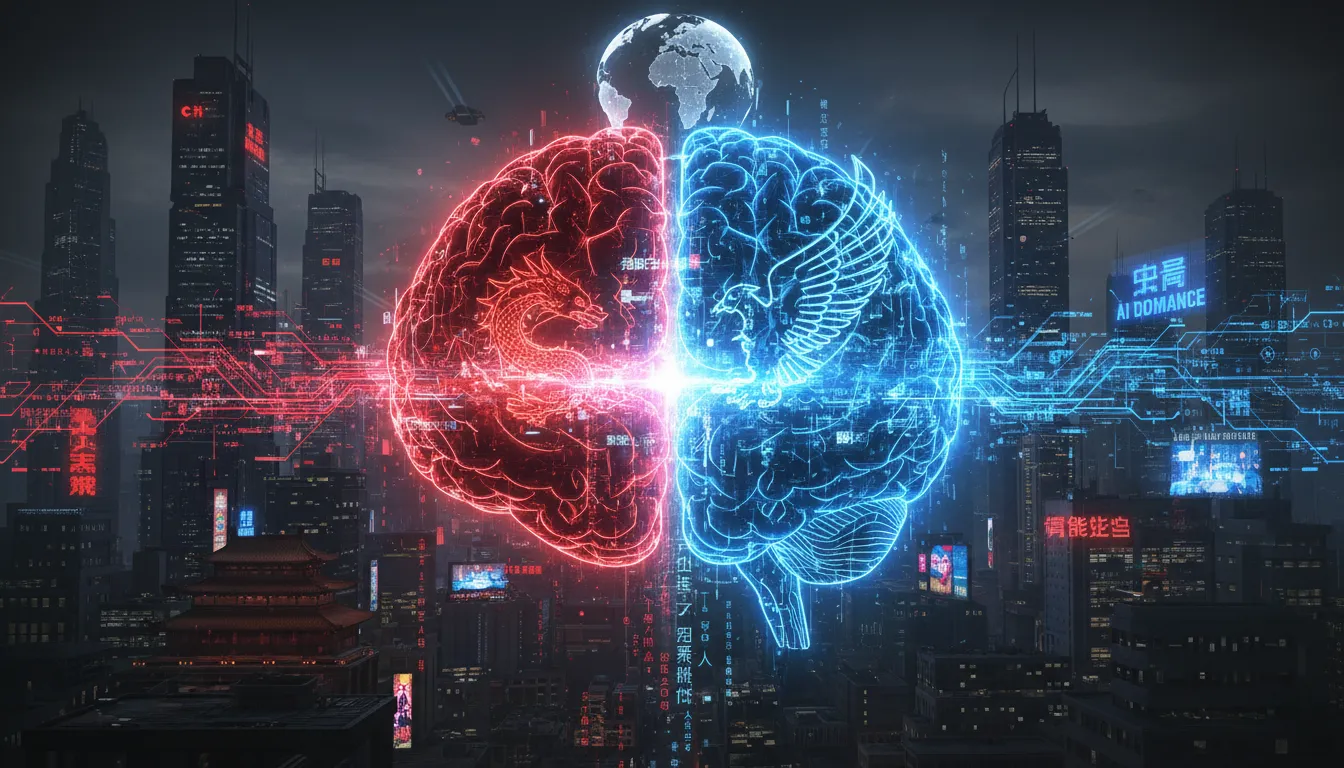

Anthropic just dropped a bombshell — and the AI community is having a field day with it. The company behind Claude is publicly accusing three major Chinese AI labs of running massive “distillation attacks” against their model. And honestly? The reaction has been anything but sympathetic.
What Anthropic Is Claiming
According to Anthropic’s official blog post, DeepSeek, Moonshot AI (the makers of Kimi), and MiniMax allegedly created over 24,000 fake accounts and generated more than 16 million queries against Claude. The goal? To extract Claude’s “secret sauce” — specifically its capabilities in agentic reasoning, tool use, and coding — and use that knowledge to train their own models.
This technique is called model distillation. It’s actually a legitimate training method that AI labs use on their own models to create smaller, more efficient versions. But when you do it to a competitor’s model at industrial scale, that’s a different story entirely.
The Scale Is Staggering
The numbers Anthropic shared are pretty wild. According to TechCrunch, DeepSeek was tracked with over 150,000 exchanges focused on foundational logic and alignment — particularly around finding censorship-safe alternatives to policy-sensitive queries. Moonshot AI racked up 3.4 million exchanges targeting agentic reasoning, coding, and computer vision. But MiniMax was the biggest offender with 13 million exchanges, and Anthropic says they actually watched MiniMax redirect nearly half its traffic to siphon capabilities from the latest Claude model the moment it launched.
Think about it this way: Anthropic has likely spent billions of dollars training Claude. These Chinese labs potentially replicated significant chunks of that capability for a fraction of the cost — maybe tens of thousands of dollars in API fees. That’s quite the ROI.
Why This Isn’t Surprising
If you’ve been following the Chinese AI scene, none of this should shock you. We’ve covered MiniMax and Kimi extensively on this channel, and their performance is genuinely impressive — roughly 95% of Claude’s capability at a fraction of the cost. MiniMax offers comparable performance at about 5% of the price. That kind of rapid improvement had to come from somewhere.
China has a long history of building parallel ecosystems inspired by Western platforms. Taobao for eBay/Amazon, Weibo for Twitter (there are actually four Twitter clones in China), WeChat for everything else. The AI space is just the latest frontier, and the stakes are astronomically higher.
The Internet Clapped Back Hard
Here’s where it gets spicy. Anthropic is calling for “rapid, coordinated action among industry players, policy makers, and the broader AI community” to address these attacks. But the AI community’s response has been… let’s say unsympathetic.
The backlash centers on one word: hypocrisy. Anthropic, now valued at a staggering $380 billion, is itself facing multiple lawsuits accusing the company of illegally using copyrighted internet data to train Claude. Even Elon Musk weighed in, pointing out that Anthropic allegedly settled a $1.5 billion lawsuit related to training Claude on copyrighted books. Someone even demonstrated that Claude could reproduce roughly 95% of Harry Potter books when prompted — suggesting Anthropic dumped massive amounts of copyrighted material into their training data.
As many in the community put it: it’s “circle stealing.” Everyone’s copying from everyone. The Chinese labs at least paid for API access — the millions of writers whose work was scraped to train Claude weren’t given that courtesy.
The Bigger Picture: Who Actually Wins?
Here’s my take on why this whole situation is actually good for us. All this competition — whether through legitimate research or questionable distillation — is driving costs down dramatically. We no longer have to shell out thousands of dollars for top-tier AI access. Sure, Anthropic’s Opus 6 is still expensive, but when MiniMax gives you 95% of the performance at 5% of the cost, that’s massive savings for developers and businesses.
And the race is far from over. DeepSeek is reportedly preparing to release V4, which could outperform both Claude and ChatGPT in coding tasks. Meanwhile, Moonshot just released Kimi K2.5 and a new coding agent last month.
From our internal testing, Opus still has an edge. It’s appreciably smarter on logic tasks — like knowing you should drive to a car wash rather than walk (MiniMax still gets that wrong about 30% of the time, while Opus nails it 95% of the time). But whether that intelligence gap is worth paying 20x more is a question every developer has to answer for themselves.
What Happens Next
This story ties directly into the broader US-China AI rivalry. The Trump administration recently allowed Nvidia to export advanced H200 chips to China, and Anthropic is now arguing that distillation attacks “reinforce the rationale for export controls” since restricted chip access would limit both direct model training and the scale of these extraction campaigns.
One thing that makes this race particularly interesting: AI doesn’t care what language you speak. You can paste a Chinese API, a Chinese website, and your AI tools will work with it seamlessly. The global push toward AGI is accelerating from all directions, and the competition between US and Chinese labs is only going to intensify.
China produces more engineers per year than the US simply due to population scale, and those developers are feeding data back into Chinese models just as Western developers improve Claude through their interactions with it. This isn’t the first shot fired in this AI arms race, and it certainly won’t be the last.
Whether you think this is good or bad for the industry, one thing’s clear: we’re all benefiting from cheaper, more capable AI as a result. And that’s something worth watching closely.

Michael Gu
Michael Gu, Creator of Boxmining, stared in the Blockchain space as a Bitcoin miner in 2012. Something he immediately noticed was that accurate information is hard to come by in this space. He started Boxmining in 2017 mainly as a passion project, to educate people on digital assets and share his experiences. Being based in Asia, Michael also found a huge discrepancy between digital asset trends and knowledge gap in the West and China.